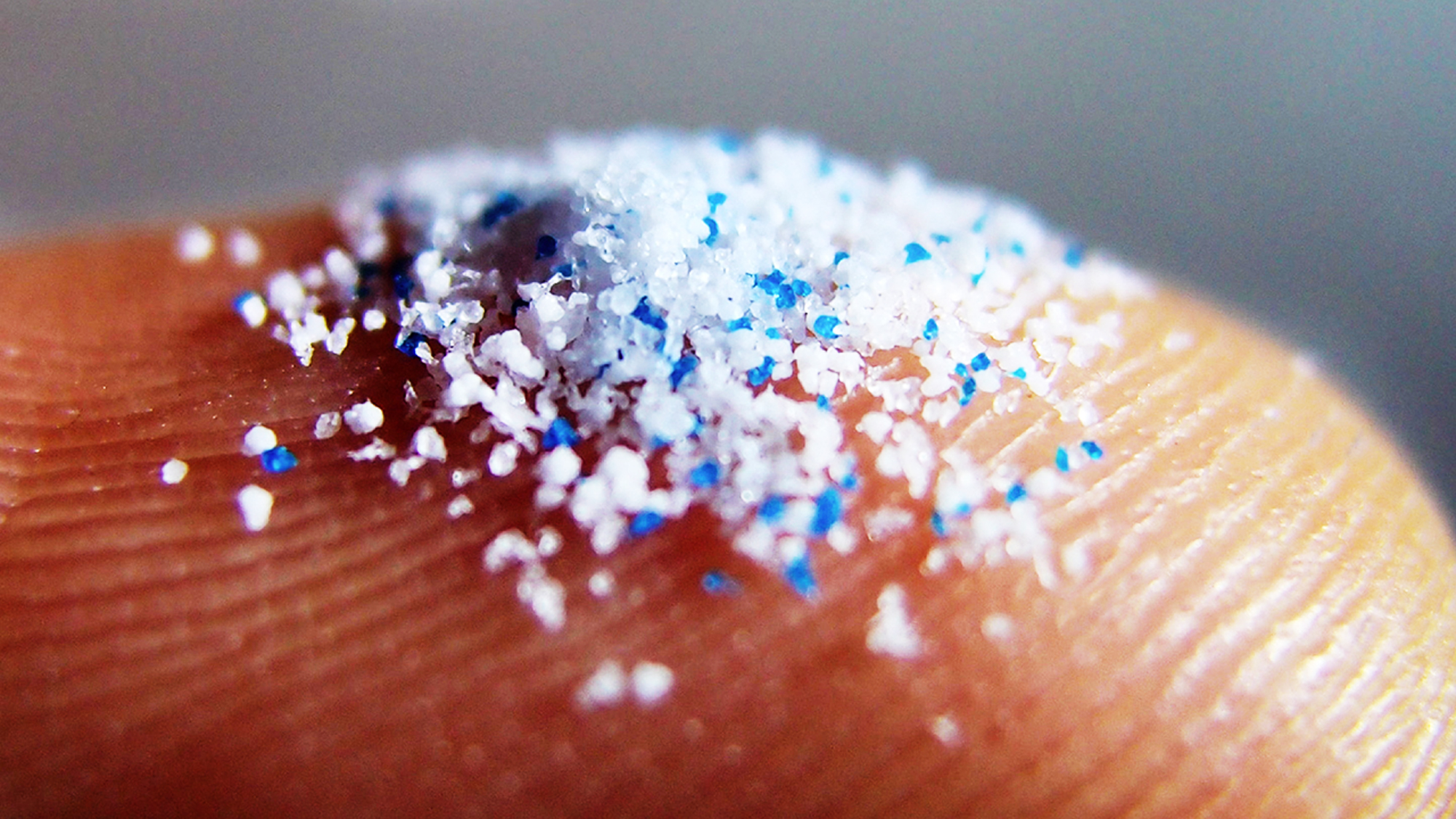
Marine environments all over the world are contaminated with plastics. Plastics can be encountered in two forms: large plastic wastes, and small plastic particulates below 5 mm in size named microplastics.
Once in the oceans, microplastics can either float or sink. Microplastics lighter than seawater such as polypropylene will float and disperse widely across the oceans. They eventually accumulate in gyres resulting from oceanic currents.
Other microplastics such as acrylic are denser than seawater and most probably accumulate on the ocean floor, which means that a significant amount of microplastics may eventually accumulate in the deep sea and ultimately in food chains.
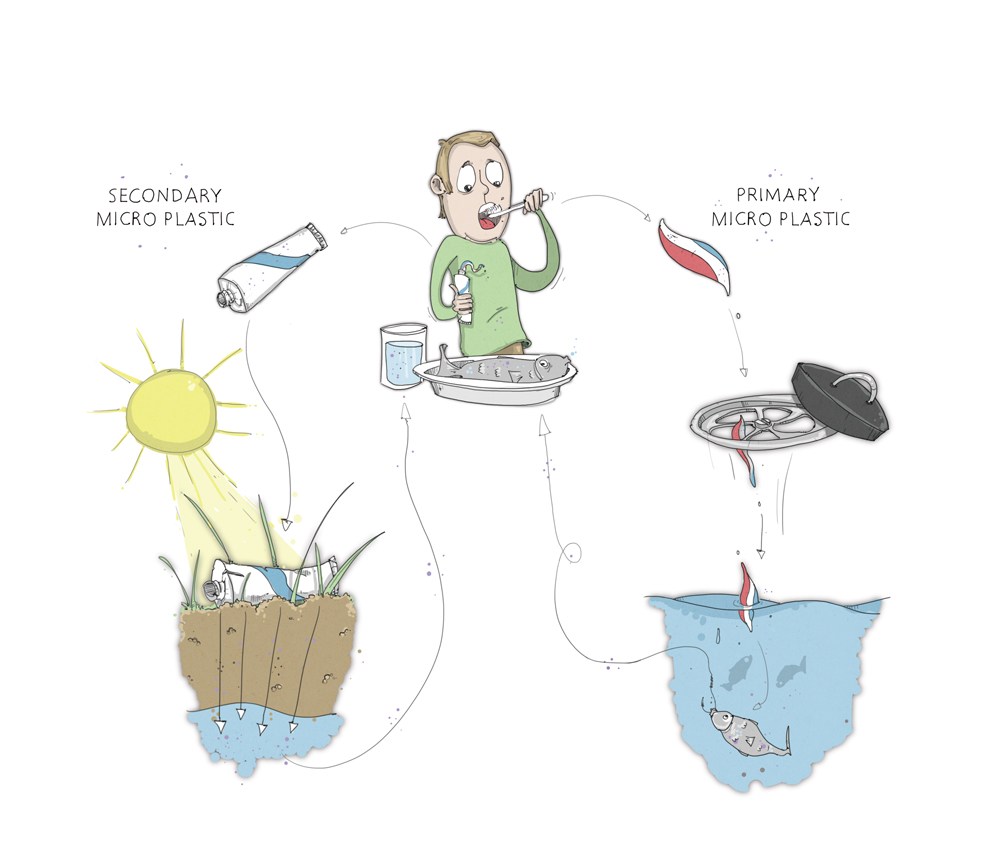
Microplastics directly released into the environment in the form of small particulates. Can be a voluntary addition to products such as scrubbing agents in toiletries and cosmetics, or can originate from the abrasion of large plastic objects during manufacturing, use or maintenance such as the erosion of tires when driving or of the abrasion of synthetic textiles during washing.
Microplastics originating from the degradation of larger plastic items into smaller fragments once exposed to marine environment. This happens through photodegradation and other weathering processes of mismanaged waste such as discarded plastic bags or from unintentional losses such as fishing nets
Made by Shiven Kumar, Abhishek Pandya, and Venkatesh Narayan